
• Our Research
    • Research Strategy
    • Research Sites
    • Current Research Projects
    • Research Results
    • Research Collaborations
    • Research Resources
    • Seed Industry Research Centre
    Current Research
    Current Research
    Research Results
    Research Results
  • Resources
    • Biosecurity
    • Crop Action
    • Nutrient Management
    • Maize
    • Templates and Calculators
    • Cereals
    • Weeds
    • Pests
    • Seeds
    • Diseases
    • News
    • Environment
    • Soil
    • Schools
    Podcast
    Podcast
    Environment and Compliance
    Environment and Compliance
  • Levies & Returns
    • Arable Crops Levy
    • Maize Levy
    • Cereal Silage Levy
    • Farmer Annual Return Form
    • Wholesaler Annual Return Form
    Levies
    Levies
    Annual Returns
    Annual Returns
  • Events
  • News
  • About Us
    • Governance and growers
    • Business Strategy
    • Our People
    • Careers
    • Growers Leading Change
    • Women in Arable
    • Arable Ys
    • Arable Kids
    • Arable Research Groups (ARGs)
    • New Zealand Grown Grains
    Our People
    Our People
    Growers Leading Change
    Growers Leading Change
  • Ask FAR AI
  • Weather
  • Log In
Ask FAR AI
Weather
Log In
  • Homepage
  • Resources
  • Far Strategy 2026 2031

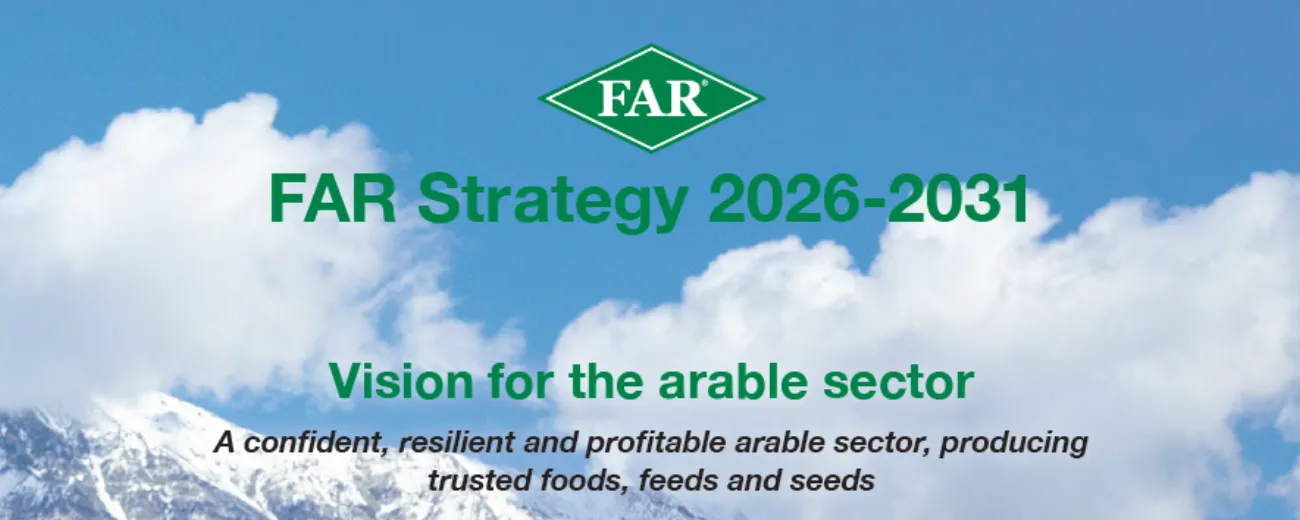
FAR Strategy 2026-2031

Strategy snip

New FAR strategy to strengthen New Zealand's arable future.

The Foundation for Arable Research (FAR) has launched its new five-year strategy, setting a clear direction for supporting a confident, resilient and profitable arable sector that produces trusted foods, feeds and seeds for New Zealand and global markets.

The strategy, which will guide FAR from 2026 to 2031, reflects the organisation's commitment to connecting growers, science and industry to support successful arable farms and a valued arable sector.

Built around four strategic goals, it focuses on delivering greater value to growers through trusted research and innovation, impactful extension, the promotion of the arable industry’s role in New Zealand, and an efficient, grower-focused organisation.

FAR’s Chair Steven Bierema said the strategy was designed to ensure that growers receive practical, independent support in an increasingly complex and interconnected arable sector.

"New Zealand's arable growers are facing both significant challenges and exciting opportunities. Our new strategy sets out how FAR will connect growers with the science, information and industry partnerships they need to make confident decisions and build resilient businesses," Mr Bierema said.

Under the strategy, FAR will focus on four key goals:

Extension with impact

FAR will deliver value to arable growers by providing trusted and timely information, delivering research results promptly, translating science to support practical on-farm decisions, and continuing to evolve extension approaches to meet growers' needs.

Trusted research, development and innovation

FAR will contribute to arable farm success by engaging growers to identify the research that matters most, prioritising those projects that promise maximum industry impact, and partnering with growers, research providers and industry, nationally and internationally, to deliver outcomes.

Building arable sector understanding

The organisation will work to ensure a visible and valued arable sector by championing arable farming's contribution to New Zealand, building a robust evidence base to demonstrate the sector's value, and strengthening relationships with government, commercial service providers and other primary sectors.

An efficient and agile FAR

FAR will be a responsive and agile organisation, focused on careful stewardship of grower investment, continuous evaluation of its programmes, and the ongoing development of a connected and capable FAR team.

FAR CEO, Dr Scott Champion said strong connection to growers and collaboration are at the heart of FAR's approach.

"Everything we do starts with growers. Their investment, experience and insights help shape our priorities and ensure our work delivers real value back to them. This strategy reinforces our commitment to being grower-focused while strengthening the connections between farming, science and industry. Growers also want us to help them think about the whole system, those other crops and the integration of livestock that are part of many arable farms."

He said the strategy also recognises the importance of increasing awareness of the arable sector's contribution to New Zealand's economy, food systems and rural communities.

"Arable farming plays a critical role in producing the trusted foods, feeds and seeds that underpin New Zealand's agricultural success. We want the sector to be more visible, better understood and recognised for the value it creates across the economy and society."

The strategy is underpinned by FAR's principles of being grower focused and enhancing arable community, together with the organisation's core values of being trusted, independent, collaborative, curious and engaged.

Dr Champion said these principles and values would guide FAR's work over the next five years.

"Our vision is for a confident, resilient and profitable arable sector. This strategy provides a roadmap for how FAR will work alongside growers and industry partners to help achieve that vision."

Read the full strategy here.

Related Resources

22 July 2026

Calling East Coast maize growers...

If you’re an East Coast maize grower interested in improving nitrogen use efficiency, profitability and environmental outcomes, read on! FAR is offering several opportunities for maize growers to learn, collaborate and help shape future nitrogen management recommendations.

Read more
22 July 2026

Southern Arable Research Hub

FAR's Southern Arable Research Hub at Knapdale, north of Gore, is currently entering its third season. Here’s an update of what has been going on.

Read more
22 July 2026

Seeking grower input

Want to have more of a say in how FAR operates in Canterbury? We’re looking for growers to join the Mid-Canterbury (MC) and Northern South Island (NSI) Arable Research Groups (ARGs). ARGs work with FAR to guide research and extension delivery within their region. Each of FAR’s seven ARGs includes up to 11 growers and up to five appointed members (usually from industry). They meet three or four times a year to share regional ideas and information and discuss research and extension projects. 

Read more
22 July 2026

Saving cost though input application efficiency

With concerns about fuel and fertiliser prices increasing, FAR Technology Manager Chris Smith has some tips for doing your best to use inputs as efficiently as possible. 

Read more
22 July 2026

Full steam ahead for 2026 New Zealand Arable Awards

Planning for the 2026 New Zealand Arable Awards is well underway...all we need now are your nominations.

Read more
22 July 2026

Reducing reliance on herbicide

A large-scale research project is establishing a diverse and sustainable toolkit of weed management strategies for cropping farmers in the face of rising rates of herbicide resistance. 

Read more
22 July 2026

Black-grass update March/April 2026

Read this autumn black grass update here. 

Read more
22 July 2026

2026 harvest adversity recognised by government

The Government has classified the past few months' of challenging weather conditions in Canterbury, Bay of Plenty, Gisborne/Tairāwhiti, as a medium-scale adverse event.

Read more
22 July 2026

Do solar and batteries stack up for arable?

A number of arable farmers are partnering in a Government project exploring the use of solar and batteries on New Zealand farms.

Read more
22 July 2026

Early detection of brown marmorated stink bug confirms surveillance strength

A single male brown marmorated stink bug (BMSB) has been detected in a surveillance trap in Ōrākei, Auckland. The find was made on Tuesday 3 February, during routine monitoring.

Read more

Ask FAR AI

Ask FAR is a new way to get information from the FAR website. Just ‘Ask FAR’ a question and you’ll get a quick, accurate response based on FAR research and resources. Ask FAR also provides links to the original documents for more information. It’s quick, easy and reliable. Ask FAR now!

Start Chatting
  • Research
  • Levies and Returns
  • Resources
  • Events
  • News
  • Contact Us
  • Schools
  • About Us
  • Privacy Policy
  • Terms of use

©2022 Foundation for Arable Research