
• Our Research
    • Research Strategy
    • Research Sites
    • Current Research Projects
    • Research Results
    • Research Collaborations
    • Research Resources
    • Seed Industry Research Centre
    Current Research
    Current Research
    Research Results
    Research Results
  • Resources
    • Biosecurity
    • Crop Action
    • Nutrient Management
    • Maize
    • Templates and Calculators
    • Cereals
    • Weeds
    • Pests
    • Seeds
    • Diseases
    • News
    • Environment
    • Soil
    • Schools
    Podcast
    Podcast
    Environment and Compliance
    Environment and Compliance
  • Levies & Returns
    • Arable Crops Levy
    • Maize Levy
    • Cereal Silage Levy
    • Farmer Annual Return Form
    • Wholesaler Annual Return Form
    Levies
    Levies
    Annual Returns
    Annual Returns
  • Events
  • News
  • About Us
    • Governance and growers
    • Business Strategy
    • Our People
    • Careers
    • Growers Leading Change
    • Women in Arable
    • Arable Ys
    • Arable Kids
    • Arable Research Groups (ARGs)
    • New Zealand Grown Grains
    Our People
    Our People
    Growers Leading Change
    Growers Leading Change
  • Ask FAR AI
  • Weather
  • Log In
Ask FAR AI
Weather
Log In
  • Homepage
  • Resources
  • Impact Of Establishment Method On Maize Grain And Silage Crops

Impact of establishment method on maize grain and silage crops

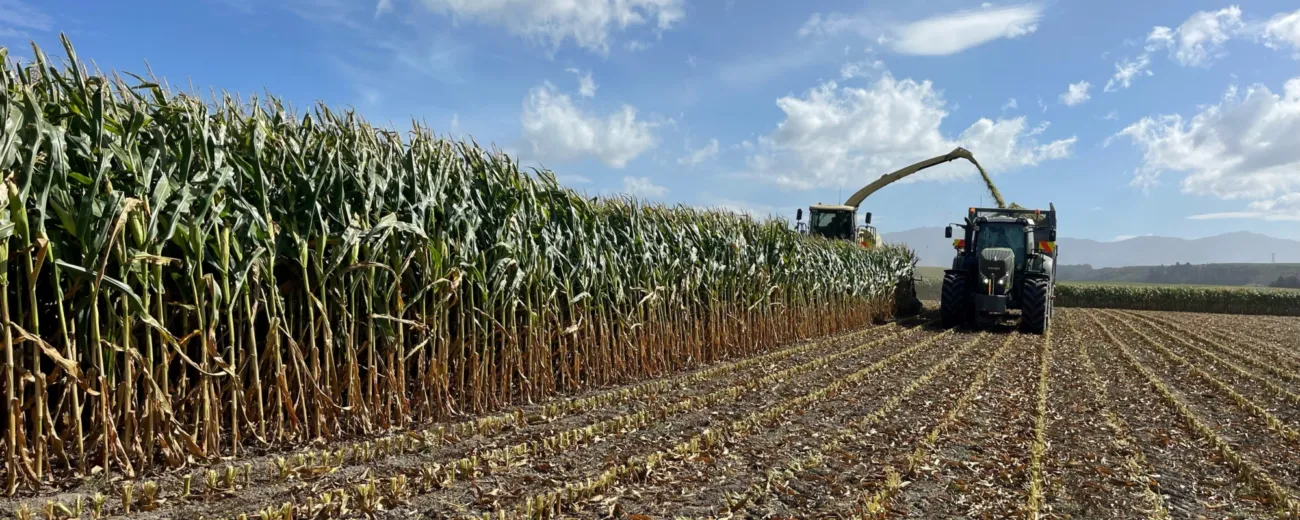
Maize silage harvest South Canty

This report discusses the effects of maize establishment methods on established plant populations, maize yields, and associated gross margins. It is based on the findings of 38 FAR maize tillage and establishment trials between 2005 and 2020. This report discusses the effects of maize establishment methods on established plant populations, maize yields, and associated gross margins. It is based on the findings of 38 FAR maize tillage and establishment trials between 2005 and 2020.

A meta-analysis of 38 FAR trials investigating different tillage establishment methods for maize production was carried out by Plant & Food Research (PFR). The main findings included: 

  • A yield advantage to using full cultivation establishment practices was observed. Median grain yield was approximately 5% higher, or 0.5 t/ha for full cultivation (FC) compared to the no tillage (NT) treatment, while 25 % of the trials had a FC yield advantage >10%. It is, however, not possible to comment upon whether best practice tillage was conducted in these trials.

  • When a subset of the data was used to include only sites with a seeding rate of 88–90 thousand seeds per hectare, the established plant population was consistently lower for the NT tillage (median 85 000 seeds/ha) than strip tillage (ST) and FC treatments (medians 90 and 88 000 seeds/ha). Established plant population is often considered to be more variable under NT than FC, but we did not observe it to be more variable, just lower overall. 

  • While there are insufficient data to compare results robustly, there is no indication of yield advantage or penalty associated with nitrogen (N) fertiliser rate, or of an N interaction with tillage treatment. We observed for two silage trials where zero fertiliser N was applied, yields of ~18 and 27 t DM/ha were recorded. As no soil mineral N information was available, we cannot comment on whether this trend is observed due to ample soil and fertiliser N in the growing system, resulting in yields being limited by factors other than N or otherwise. 

  • Using a slightly modified overall dataset to investigate financial aspects, we found that the economic advantage tended to favour NT. This was largely assumed to be associated with taking into account the cost of additional cultivation passes for FC and was noted despite our previous observation of a small yield advantage to FC.

Read the full report here.

Related Resources

19 February 2026

Checking maize maturity pre-harvest

Start checking maize crop maturity about three weeks prior to when you think you’ll be starting your silage harvest. Good quality maize silage is best made when whole plant dry matter is between 30-40%

Read more
19 February 2026

Growing maize on peat soils

This is the handout from a field day hosted by the Stobie family, Gordonton, Waikato on 4 February 2026.

Read more
19 February 2026

The drying and storage of grain and herbage seeds

Welcome to the revised 2025 version of  The drying and storage of grain and herbage seed, first published in 1999. The book comprises six chapters that cover grain characteristics and their reaction to climate, the importance of seed moisture, the drying system, the storage environment, storage pests and their control, and construction considerations. These have been edited and updated by FAR staff and independent experts from the original chapters written by the late Murray Hill.

Read more
19 February 2026

Report all velvetleaf

A velvetleaf find in a paddock that has been ‘clean’ for seven years, is a clear reminder of how long this weed’s seed will remain viable.

Read more
19 February 2026

AIMI Maize survey to 31 October 2025

This AIMI survey of maize growers provides details of the 2025 New Zealand maize grain and silage harvest, along with sowing intentions for the coming year.

Read more
19 February 2026

Arable Industry Code of Conduct

Read the full arable industry code of conduct here. 

Read more
19 February 2026

Maize update 92: Mechanical weeding in maize

Maize is one of the easiest crops to mechanically weed and levels of weed control comparable to herbicides can be achieved. Find out more about the options available and how they work in this maize update.

Read more
19 February 2026

Maize update 91: Management options for specific weeds in maize

Weed related yield losses ranging from 15% to 56% for silage and 15% to 61% for grain have been observed in New Zealand maize systems. In this maize update find out management strategies for a number of common annual and perennial weeds of maize.

Read more
19 February 2026

Maize Update 90 Maize pre-emergence herbicides and how best to use them

Pre-emergence herbicides have been the mainstay of maize weed management. This Maize Update discusses factors affecting pre-emergence herbicide success including application timing, modes of action and soil interactions. 

Read more
19 February 2026

Maize Update 89: On-farm biosecurity: Invasive weeds in maize systems and how to avoid them

Farmers face three levels of biosecurity risk; regional biosecurity incursion risk; border biosecurity, regional biosecurity and on-farm biosecurity. This Maize update discusses the importance of on-farm biosecurity, the one factor you have control over.

Read more

Ask FAR AI

Ask FAR is a new way to get information from the FAR website. Just ‘Ask FAR’ a question and you’ll get a quick, accurate response based on FAR research and resources. Ask FAR also provides links to the original documents for more information. It’s quick, easy and reliable. Ask FAR now!

Start Chatting
  • Research
  • Levies and Returns
  • Resources
  • Events
  • News
  • Contact Us
  • Schools
  • About Us
  • Privacy Policy
  • Terms of use

©2022 Foundation for Arable Research