
• Our Research
    • Research Strategy
    • Research Sites
    • Current Research Projects
    • Research Results
    • Research Collaborations
    • Research Resources
    • Seed Industry Research Centre
    Current Research
    Current Research
    Research Results
    Research Results
  • Resources
    • Biosecurity
    • Crop Action
    • Nutrient Management
    • Maize
    • Templates and Calculators
    • Cereals
    • Weeds
    • Pests
    • Seeds
    • Diseases
    • News
    • Environment
    • Soil
    • Technology
    • Schools
    Podcast
    Podcast
    Environment and Compliance
    Environment and Compliance
  • Levies & Returns
    • Arable Crops Levy
    • Maize Levy
    • Cereal Silage Levy
    • Farmer Annual Return Form
    • Wholesaler Annual Return Form
    Levies
    Levies
    Annual Returns
    Annual Returns
  • Events
  • News
  • About Us
    • Governance and growers
    • Business Strategy
    • Our People
    • Careers
    • Growers Leading Change
    • Women in Arable
    • Arable Ys
    • Arable Kids
    • Arable Research Groups (ARGs)
    • New Zealand Grown Grains
    Our People
    Our People
    Growers Leading Change
    Growers Leading Change
  • Ask FAR AI
  • Weather
  • Log In
Ask FAR AI
Weather
Log In
  • Homepage
  • Resources
  • The Drying And Storage Of Grain And Herbage Seeds

The drying and storage of grain and herbage seeds

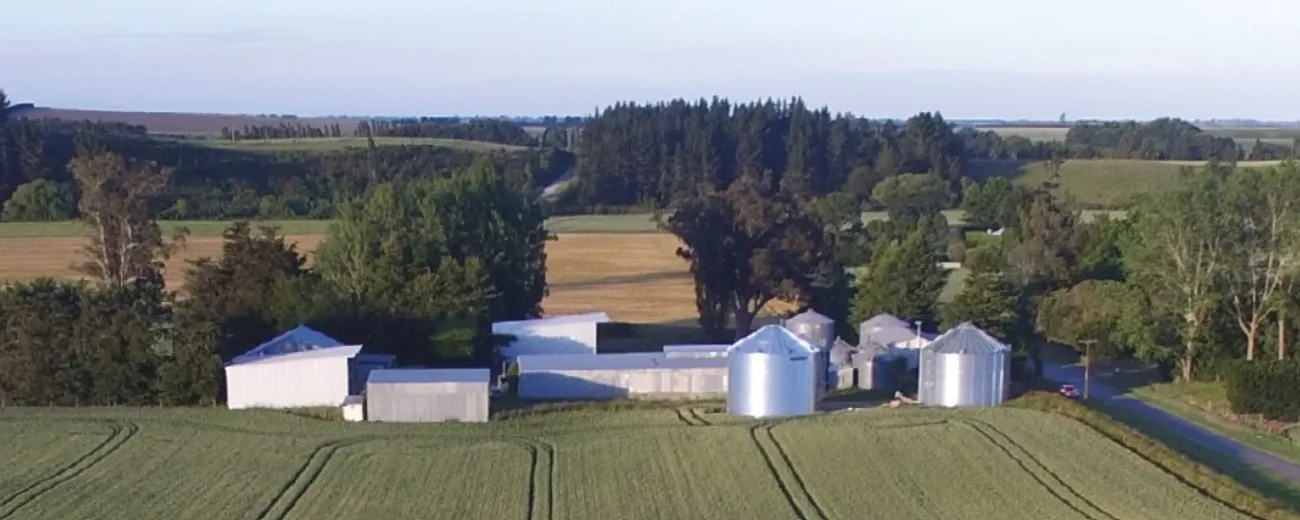
Silos

Welcome to the revised 2025 version of  The drying and storage of grain and herbage seed, first published in 1999. The book comprises six chapters that cover grain characteristics and their reaction to climate, the importance of seed moisture, the drying system, the storage environment, storage pests and their control, and construction considerations. These have been edited and updated by FAR staff and independent experts from the original chapters written by the late Murray Hill.

This second edition provides valuable New Zealand specific information on grain and seed handling and storage and is a must for all arable growers and industry personnel involved in the drying or storage of grain and seed crops. I hope that you will find the book a valuable resource to support your production of high-quality crops.

Download or read the book here.

Related Resources

13 November 2026

H87: Building a stem rust programme for perennial ryegrass seed crops

This update explains new research into fungicide timings to manage stem rust in perennial ryegrass crops, moving from a reactive approach in favour of preventative applications timed at key stages of crop development.

Read more
13 November 2026

AIMI New Zealand survey of cereals areas and volumes: October 10, 2026

The AIMI survey of New Zealand cereal growers, as at October 10, 2026 is now available online. 

Read more
13 November 2026

Ryegrass seed costs of production estimated at $3.73/kg for 2026/27

Independent analysis of estimated on-farm ryegrass seed crop growing costs in Canterbury for the 2026/27 season shows a median cost of production to be $3.73 per kilo for growing costs and farm overheads plus business costs. This analysis is specific to the Nui-type, diploid, non-endophytic, non-NZ-proprietary category. 

Read more
13 November 2026

Cereal Update Issue 237: Understanding Barley Yellow Dwarf Virus (BYDV)

BYDV is a complex, aphid-transmitted disease that poses significant risks to cereal production in New Zealand. Find out more about the disease in this update.

Read more
13 November 2026

Cereal Update Issue 236: Triazoles (Group 3) fungicide options for T1 (GS 31 - 33)

A T1 fungicide can be the hardest application to get right. Ideally, it targets GS 32 (leaf 3 emergence, two leaves below the flag), but getting the timing right can be challenging if conditions are wet and/or windy. FAR has extended the T1 window to late GS 31- GS 33 find out more here.

Read more
13 November 2026

Spring field walk booklet September 2026

If you couldn't make it to this year's early spring field walks check out the booklet here.

Read more
13 November 2026

New Zealand’s seed and grain sector, growers, and government join to drive arable sector growth and resilience

Arable sector industry bodies and the Government have committed to working together on actions to drive the future success and resilience of New Zealand’s arable sector.

Read more
13 November 2026

From the Ground Up Issue, 124

Welcome to the Winter 2026 edition of From the Ground Up.

Read more
13 November 2026

Arable was the winner on the night

Eight award winners were named on Thursday night (20 August, 2026) and four people/couples were inducted into the Arable Industry Hall of Fame.

Read more
13 November 2026

H86 Effect of row spacing on seed yield in two white clover cultivars

Row spacing is an important management strategy in white clover (Trifolium repens) seed crops. Stolons grow outward from the crown of the plant into the space between rows. Nodes produced along the stolon bear either vegetative axillary growth (e.g. a branch) or a reproductive leaf-flower combination. The more nodes that are produced per stolon, and subsequently per unit area, the greater opportunity for flower production and thereby seed yield. In theory, wider row spacing should produce more flowers/m2 due to more space for stolon proliferation.

Read more

Ask FAR AI

Ask FAR is a new way to get information from the FAR website. Just ‘Ask FAR’ a question and you’ll get a quick, accurate response based on FAR research and resources. Ask FAR also provides links to the original documents for more information. It’s quick, easy and reliable. Ask FAR now!

Start Chatting
  • Research
  • Levies and Returns
  • Resources
  • Events
  • News
  • Contact Us
  • Schools
  • About Us
  • Privacy Policy
  • Terms of use

©2022 Foundation for Arable Research