• Our Research
    • Research Strategy
    • Research Sites
    • Current Research Projects
    • Research Results
    • Research Collaborations
    • Research Resources
    • Seed Industry Research Centre
    Current Research
    Current Research
    Research Results
    Research Results
  • Resources
    • Biosecurity
    • Crop Action
    • Nutrient Management
    • Maize
    • Templates and Calculators
    • Cereals
    • Weeds
    • Pests
    • Seeds
    • Diseases
    • News
    • Environment
    • Soil
    • Technology
    • Schools
    Podcast
    Podcast
    Environment and Compliance
    Environment and Compliance
  • Levies & Returns
    • Arable Crops Levy
    • Maize Levy
    • Cereal Silage Levy
    • Farmer Annual Return Form
    • Wholesaler Annual Return Form
    Levies
    Levies
    Annual Returns
    Annual Returns
  • Events
  • News
  • About Us
    • Governance and growers
    • Business Strategy
    • Our People
    • Careers
    • Growers Leading Change
    • Women in Arable
    • Arable Ys
    • Arable Kids
    • Arable Research Groups (ARGs)
    • New Zealand Grown Grains
    Our People
    Our People
    Growers Leading Change
    Growers Leading Change
  • Ask FAR AI
  • Weather
  • Log In
Ask FAR AI
Weather
Log In
  • Homepage
  • Resources
  • H 82 Irrigation Management For Browntop Seed Crops

H82 Irrigation management for browntop seed crops

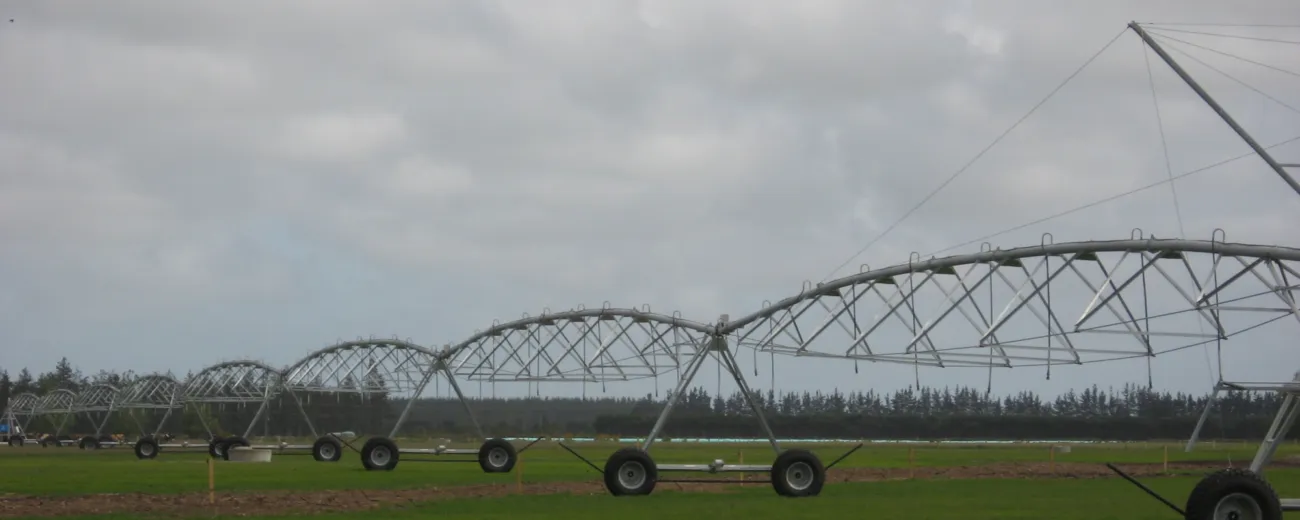
Irrigator

This Herbage Update summarises findings from three seasons of irrigation on browntop trials in Canterbury, New Zealand.

Key Points: 

  • Browntop seed yield on Templeton Silt Loam soils increased with irrigation across three seasons, with optimal results achieved from 334 to 486 mm of water applied.
  • On average, crops required around 400 mm of irrigation from September to harvest reflecting the higher water demand associated with browntop's late maturity.
  • Seed yield consistently dropped once the critical soil moisture deficit (Dc) of 54 mm was exceeded, regardless of when drought occurred, indicating that browntop seed crops are less drought-tolerant than ryegrass, wheat or cocksfoot (critical deficit ≥70 mm at the same site).
  • Continuous irrigation is essential throughout the season, particularly during hot, dry periods, to prevent stress at any growth stage and maintain seed yield.
  • Higher seed yields were associated with greater seed head numbers and branching, resulting in more seeds per square metre. 

Read the full update here. 

Related Resources

23 October 2026

Arable Extra Issue 146: Micronutrients: An on-farm decision making matrix

Micronutrients are essential trace elements required by plants in very small quantities (mg/kg dry matter). They are critical for normal plant growth, development, and reproduction. Find out more about micronutrients here.

Read more
23 October 2026

Arable Extra Issue 145: Spring nutrient requirement tips

This Arable Extra covers tips for spring nutrient requirements including nitrogen, phosphorus, potassium, sulphur and magnesium. 

Read more
23 October 2026

Choosing the right nitrogen product

This fact sheet outlines the differences between urea, urease inhibitors, polymer coated urea (PCU), nitrification inhibitors, calcined ammonium nitrate, ammonium sulphate or sulphate of ammonia and compound fertilisers.

Read more
23 October 2026

Spring field walk booklet September 2026

If you couldn't make it to this year's early spring field walks check out the booklet here.

Read more
23 October 2026

H86 Effect of row spacing on seed yield in two white clover cultivars

Row spacing is an important management strategy in white clover (Trifolium repens) seed crops. Stolons grow outward from the crown of the plant into the space between rows. Nodes produced along the stolon bear either vegetative axillary growth (e.g. a branch) or a reproductive leaf-flower combination. The more nodes that are produced per stolon, and subsequently per unit area, the greater opportunity for flower production and thereby seed yield. In theory, wider row spacing should produce more flowers/m2 due to more space for stolon proliferation.

Read more
23 October 2026

H85 Plantain seed crop responses to spring nitrogen in Canterbury

Plantain has become an increasingly important component of pasture seed mixes, driven in part by heightened environmental concerns regarding nitrate leaching from grazed pastoral systems. Nitrogen (N) fertiliser management is widely regarded as the principal agronomic lever for increasing plantain seed yield, especially in environments with low inherent soil fertility. This project aims to improve the agronomy of plantain seed production by identifying optimal biological and economic N application rates.

Read more
23 October 2026

H84 Yield responses to fungicides in perennial ryegrass seed crops

Perennial ryegrass (Lolium perenne L.) is the main ryegrass species grown for seed in New Zealand, supporting both pasture and turf markets. Canterbury leads production, with around 12,000 ha sown annually. This study pulls together results from ten Canterbury field trials to assess how different fungicide programmes and timings affect seed yield. It compares early versus late applications and offers practical advice to help growers improve rust control and maximise returns.

Read more
23 October 2026

White clover harvest and weed management senimar booklet

Catch up on the booklet for the white clover seminar held April 2026. 

Read more
23 October 2026

From the Ground Up: Autumn 2026

Welcome to the autumn 2026 edition of From the Ground Up. 

Read more
23 October 2026

T002 Combine settings in wet conditions

Sometimes, the only way to bring in a crop is to harvest in conditions that are less than ideal. If you find yourself in this situation, it’s a good idea to think about your combine settings to help reduce losses and prevent unnecessary breakdowns. This Technical Update  covers some of the key points for getting the job done .

Read more

Ask FAR AI

Ask FAR is a new way to get information from the FAR website. Just ‘Ask FAR’ a question and you’ll get a quick, accurate response based on FAR research and resources. Ask FAR also provides links to the original documents for more information. It’s quick, easy and reliable. Ask FAR now!

Start Chatting
  • Research
  • Levies and Returns
  • Resources
  • Events
  • News
  • Contact Us
  • Schools
  • About Us
  • Privacy Policy
  • Terms of use

©2022 Foundation for Arable Research